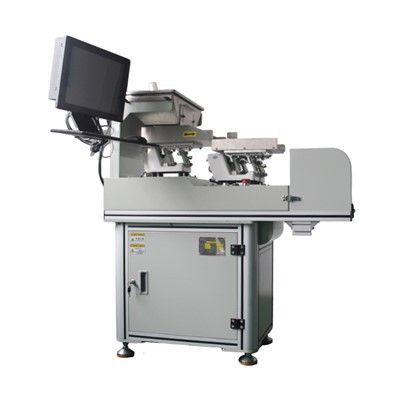
Hey there! As a supplier of CCD counting machines, I often get asked a bunch of questions about how these nifty devices work under different conditions. One question that pops up quite a bit is, "Can a CCD counting machine work in a high - humidity environment?" Well, let's dive right into it and find out.


First off, let's understand what a CCD counting machine is. CCD stands for Charge - Coupled Device. These machines use CCD technology to count objects accurately. They're super useful in a whole bunch of industries, from food and drug packaging to seed counting. You can check out some of our awesome products like Desktop Counting Machines, Food And Drug Visual Counting Packaging Machine, and Multi Channel Seed Vision Counting and Packaging Machine.
Now, let's talk about high - humidity environments. High humidity means there's a lot of water vapor in the air. This can cause all sorts of problems for electronic devices, and CCD counting machines are no exception.
One of the main issues with high humidity is condensation. When the temperature drops, the water vapor in the air can turn into liquid water on the surfaces of the machine. This can be a real headache. For example, if condensation forms on the CCD sensor, it can interfere with the light detection. The CCD sensor works by converting light into an electrical signal to count objects. But if there's water on it, the light might not be detected properly, leading to inaccurate counts.
Another problem is corrosion. High humidity creates a moist environment that can speed up the corrosion process. The metal parts inside the CCD counting machine, like the circuit boards and connectors, are at risk. Corrosion can damage these components over time, causing the machine to malfunction. If the circuit boards corrode, the electrical connections can break, and the machine might stop working altogether.
So, does this mean that CCD counting machines can't work in high - humidity environments at all? Not necessarily. There are ways to make them more resistant to the effects of high humidity.
One option is to use a sealed enclosure. By enclosing the machine in a sealed box, we can prevent water vapor from getting inside. This helps protect the sensitive components from condensation and corrosion. We can also add desiccants inside the enclosure. Desiccants are substances that absorb moisture, so they can help keep the air inside the enclosure dry.
Another approach is to use anti - corrosion coatings on the metal parts. These coatings act as a barrier between the metal and the moist air, slowing down the corrosion process. Some modern CCD counting machines also come with built - in humidity sensors. These sensors can detect high humidity levels and trigger an alarm or take preventive measures, like adjusting the internal temperature to prevent condensation.
In industries where high - humidity environments are common, like food processing plants or greenhouses, it's crucial to choose a CCD counting machine that's designed to handle these conditions. Our company offers a range of machines that are built with these considerations in mind. We've spent a lot of time researching and developing solutions to make our CCD counting machines as reliable as possible in high - humidity settings.
Let's take a look at some real - world examples. In a food processing plant, where there's often a lot of steam and moisture in the air, a CCD counting machine needs to be able to work accurately. If it can't, it could lead to incorrect packaging counts, which can be a big problem for the company. By using a machine with a sealed enclosure and anti - corrosion coatings, the plant can ensure that the counting process runs smoothly, even in the humid environment.
In a greenhouse, where the humidity is naturally high to support plant growth, a multi - channel seed vision counting and packaging machine needs to function properly. Seeds need to be counted accurately for packaging and distribution. Our Multi Channel Seed Vision Counting and Packaging Machine is designed to handle these conditions, with features that protect it from the effects of high humidity.
Of course, even with all these protective measures, it's still important to maintain the CCD counting machine properly in a high - humidity environment. Regular cleaning and inspection can help detect any signs of damage early on. For example, checking for signs of corrosion on the circuit boards or making sure the desiccants are still working effectively.
In conclusion, while high - humidity environments pose challenges for CCD counting machines, it is possible for them to work in these conditions. With the right design features, like sealed enclosures, anti - corrosion coatings, and humidity sensors, and proper maintenance, these machines can provide accurate and reliable counting in even the most humid settings.
If you're in the market for a CCD counting machine and need it to work in a high - humidity environment, we're here to help. Our team of experts can provide you with all the information you need and help you choose the right machine for your specific requirements. Whether you're looking for a Desktop Counting Machines for a small - scale operation or a Food And Drug Visual Counting Packaging Machine for a large - scale production facility, we've got you covered.
So, don't hesitate to reach out to us if you have any questions or want to discuss your purchasing options. We're eager to work with you and help you find the perfect CCD counting machine solution.
References
- Principles of Electronic Instrumentation, various authors
- Handbook of Environmental Engineering for Electronic Devices, edited by industry experts