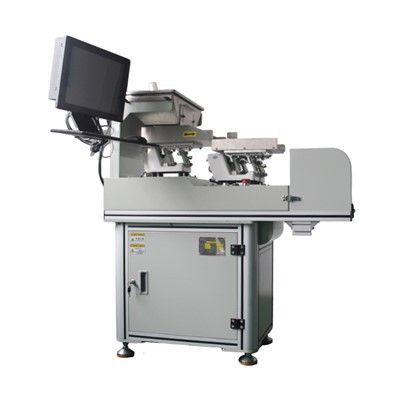
As a provider of CCD counting machines, I've witnessed firsthand the crucial role temperature plays in the performance of these sophisticated devices. CCD (Charge-Coupled Device) counting machines are widely used in various industries, from pharmaceuticals to food processing, for their precision and efficiency in counting small items. However, the operation of these machines can be significantly affected by the surrounding temperature.
Understanding CCD Counting Machines
Before delving into the impact of temperature, let's briefly understand how CCD counting machines work. These machines use a CCD sensor to capture images of the items to be counted. The sensor converts the light signals into electrical signals, which are then processed by the machine's software to accurately count the items. The precision of this process relies on the stable performance of both the CCD sensor and the associated electronics.
How Temperature Affects CCD Sensors
The CCD sensor is the heart of a CCD counting machine, and temperature can have a profound impact on its performance. At higher temperatures, the dark current of the CCD sensor increases. Dark current refers to the electrical current generated by the sensor even in the absence of light. This increase in dark current can lead to the appearance of noise in the captured images. Noise in the images can make it difficult for the counting software to accurately distinguish between the items being counted and the background, thus reducing the counting accuracy.
On the other hand, extremely low temperatures can also cause problems. Cold temperatures can slow down the electron transfer process within the CCD sensor. This can result in longer exposure times to capture clear images. Longer exposure times not only reduce the counting speed of the machine but also increase the chances of motion blur if the items being counted are in movement, further affecting the counting accuracy.
Impact on Electronics
In addition to the CCD sensor, the electronics of the counting machine, including the circuit boards and processors, are also sensitive to temperature. High temperatures can cause components to overheat, leading to thermal stress and potential component failure. This can result in unexpected breakdowns of the counting machine, causing production delays and increased maintenance costs.
Conversely, low temperatures can make the electronic components more brittle and less conductive. This can lead to poor electrical connections and signal transmission issues. For example, data transfer between the CCD sensor and the processor may become unreliable, leading to inaccurate counting results.
Heat Generation in CCD Counting Machines
CCD counting machines themselves generate heat during operation. The power consumption of the CCD sensor, the lighting system used for image capture, and the processing unit all contribute to heat generation. If the heat is not properly dissipated, the internal temperature of the machine can rise, exacerbating the problems associated with high temperatures.
To mitigate this, most CCD counting machines are equipped with cooling systems, such as heat sinks and fans. However, in high-temperature environments or during continuous operation, these cooling systems may not be sufficient to maintain an optimal temperature.
Case Studies
Let's look at some real-world examples to illustrate the impact of temperature on CCD counting machines. In a pharmaceutical factory, a CCD counting machine was installed in an area where the ambient temperature could reach up to 35°C during the summer months. The factory noticed a significant increase in counting errors during this period. After investigating, it was found that the high temperature had increased the dark current of the CCD sensor, leading to noisy images and inaccurate counting.
In another case, a food processing plant used a CCD counting machine in a cold storage area with temperatures around 5°C. The counting speed of the machine decreased significantly, and the accuracy also dropped. The slow electron transfer in the CCD sensor due to the low temperature was identified as the root cause.
Solutions to Temperature-Related Issues
To ensure the optimal performance of CCD counting machines in different temperature environments, several solutions can be implemented. Firstly, proper ventilation and cooling systems should be in place. For high-temperature environments, additional cooling devices such as air conditioners can be used to maintain a stable ambient temperature.


Secondly, the design of the counting machine should incorporate effective heat dissipation mechanisms. This may include using high-quality heat sinks, fans, and even liquid cooling systems in some cases.
Thirdly, the software of the counting machine can be optimized to compensate for temperature-related changes. For example, the software can adjust the exposure time and gain settings based on the temperature to improve the image quality.
Our Product Portfolio
We offer a wide range of CCD counting machines, including the Precision Vision Counter, Seed Counting Machine, and Wine Cork Visual Counting and Packaging Machine. These machines are designed with advanced temperature control and compensation features to ensure reliable performance in various temperature conditions.
Conclusion
Temperature has a significant impact on the performance of CCD counting machines. Both high and low temperatures can affect the CCD sensor and the associated electronics, leading to reduced counting accuracy, slower counting speed, and potential component failure. However, by understanding these effects and implementing appropriate solutions, we can minimize the impact of temperature and ensure the reliable operation of CCD counting machines.
If you are in the market for a high-quality CCD counting machine, we invite you to contact us to discuss your specific requirements. Our team of experts is ready to provide you with the best solutions for your counting needs.
References
- "CCD Imaging Handbook" by E. R. Fossum
- "Thermal Management in Electronic Devices" by T. K. Gupta
- Industry reports on the performance of CCD counting machines in different temperature environments.